As part of Mongolia’s tourism industry, we recognise that tourism brings both opportunities and challenges. We believe it’s our responsibility to help address those challenges and to use tourism as a force for positive social change.
Responsible tourism, for us, is a long-term commitment to Mongolia—its people, its landscapes, its traditions, and its modern-day culture: the country as it is. It’s not about planting trees in another country to offset our impact here.
We believe travel should be mutually positive—a force for understanding, respect, and meaningful exchange that benefits Mongolia as a whole. This page shares how we put that belief into action, how we measure our impact, and how you can travel with purpose.
‘The responsible travel value is a true value to Eternal Landscapes and core to what you do. It is not merely a nice term which you just give lip service to. I do feel that our trip was low impact. If any impact was made, it is a positive, financial one to the local communities we passed through.’
Our Sustainable Tourism Strategy guides where and how we work across Mongolia. It helps us balance exploration with responsibility, ensuring that the benefits of travel reach beyond the familiar highlights and into the everyday lives of the people who call these landscapes home.
We intentionally design experiences that avoid over-saturated routes and instead connect travellers with underrepresented regions, smaller communities, and long-term local partners. Our approach emphasises:
Working with local people — prioritising collaboration with families, cooperatives, and community-led initiatives.
Travelling with purpose — choosing routes and times of year that avoid overcrowding and support local livelihoods beyond peak season.
Keeping our footprint light — small groups, minimal waste, efficient logistics, and conscious choices about energy use and materials.
Evolving with Mongolia’s realities — adjusting our strategy as environmental, social, and economic contexts change.
Our strategy isn’t a static document; it’s a living commitment that shapes each decision we make—from the regions we visit to the partners we support.
Our philosophy only matters if it’s matched by action. We continually measure our impact and share it through our Impact Report, which outlines where our time, energy, and income flow within Mongolia.
Our initiatives include:
Our Plastic-Free Challenge — reducing single-use plastics across our trips, introducing refill systems, and supporting carbon-reducing projects in Mongolia.
Our Climate Action Plan — focusing on route efficiency, shared travel, and emissions reduction.
Carbon Measurement for International Flights — tracking guest travel to understand and offset broader impacts.
Nature Positive Tourism — from national park clean-ups to our work with the Bayansonginot Cooperative, we support practical conservation at a local scale.
We see responsible tourism as a continuous process of learning and adapting. Progress, not perfection, drives our efforts.
Tourism, at its best, uplifts people. At Eternal Landscapes, our work is rooted in equality, opportunity, and respect.
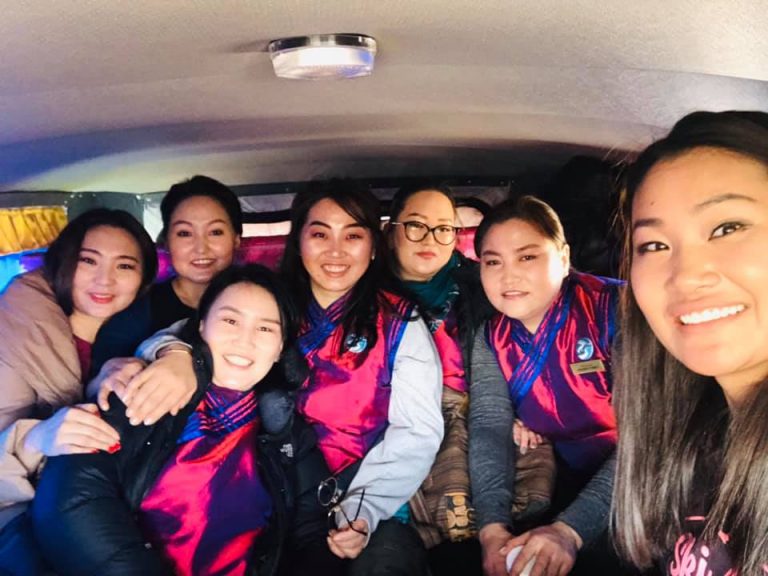
Gender Equality — we’re proud recipients of Mongolia’s Gender Equality Award and founders of Chandmana Erdene, an initiative supporting women’s leadership in tourism.
Empowering Mongolian Women in Tourism — we create fair, safe, and flexible employment opportunities, encouraging women to lead tours, manage logistics, and build confidence in a sector where they are often underrepresented.
Supporting Mongolia’s Male Tourism Drivers — recognising the challenges male drivers face, we offer training, fair pay, and long-term partnership to help sustain livelihoods and wellbeing.
Each trip you take with us directly contributes to these efforts, helping to support a more balanced, resilient, and inclusive tourism industry in Mongolia.
Mongolia’s wilderness is vast, fragile, and deeply interwoven with the people who call it home. Our aim is to ensure that travel helps protect—not pressure—these environments.
We see nature positive not as a buzzword but as a shared responsibility. For us, it means designing journeys that leave landscapes better cared for, supporting local stewardship, and helping protect biodiversity through small, consistent action.
From our National Park Community Clean-Ups to conservation-focused collaborations and responsible route planning, we’re working to keep Mongolia’s wild places thriving for future generations.
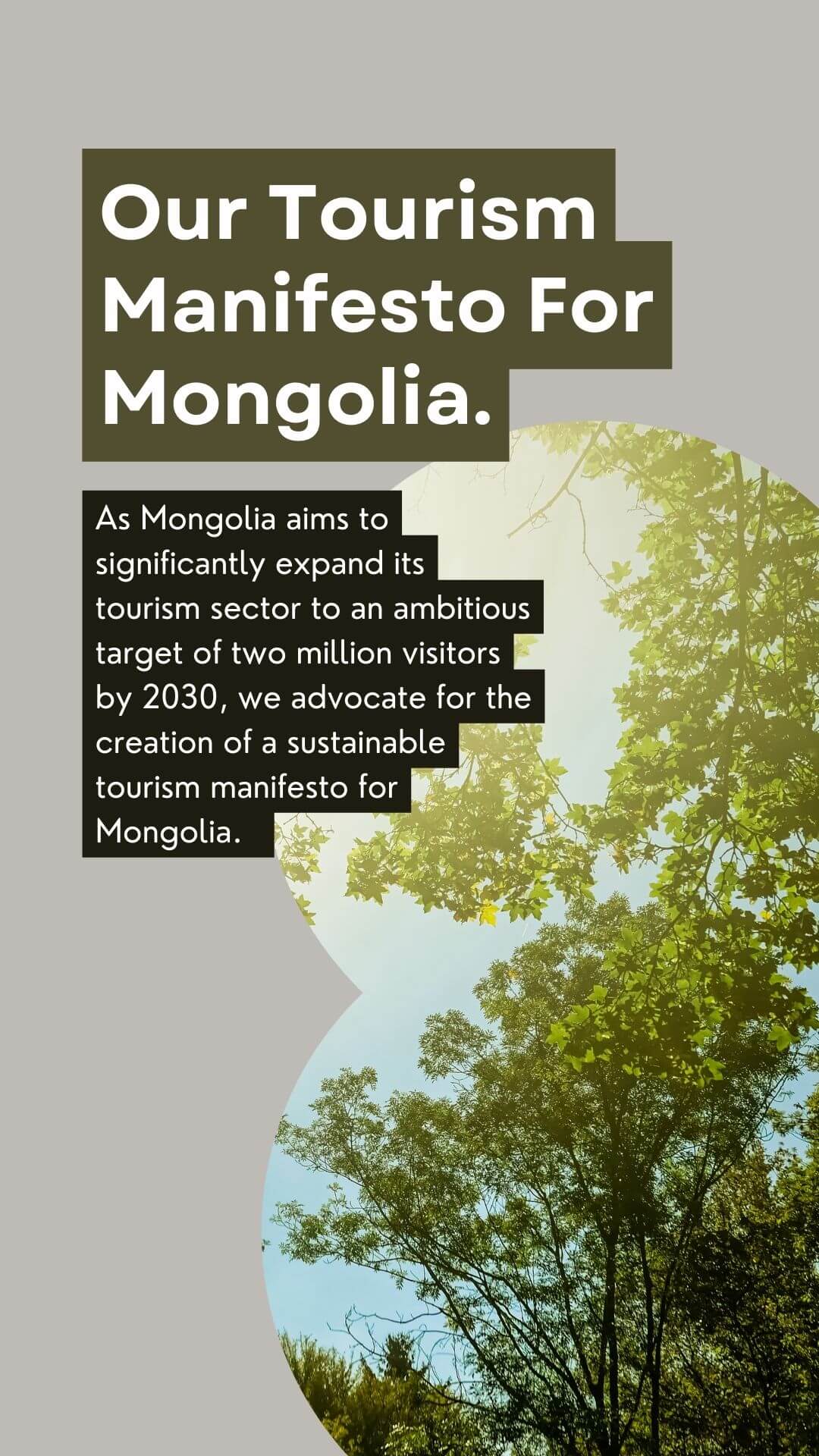
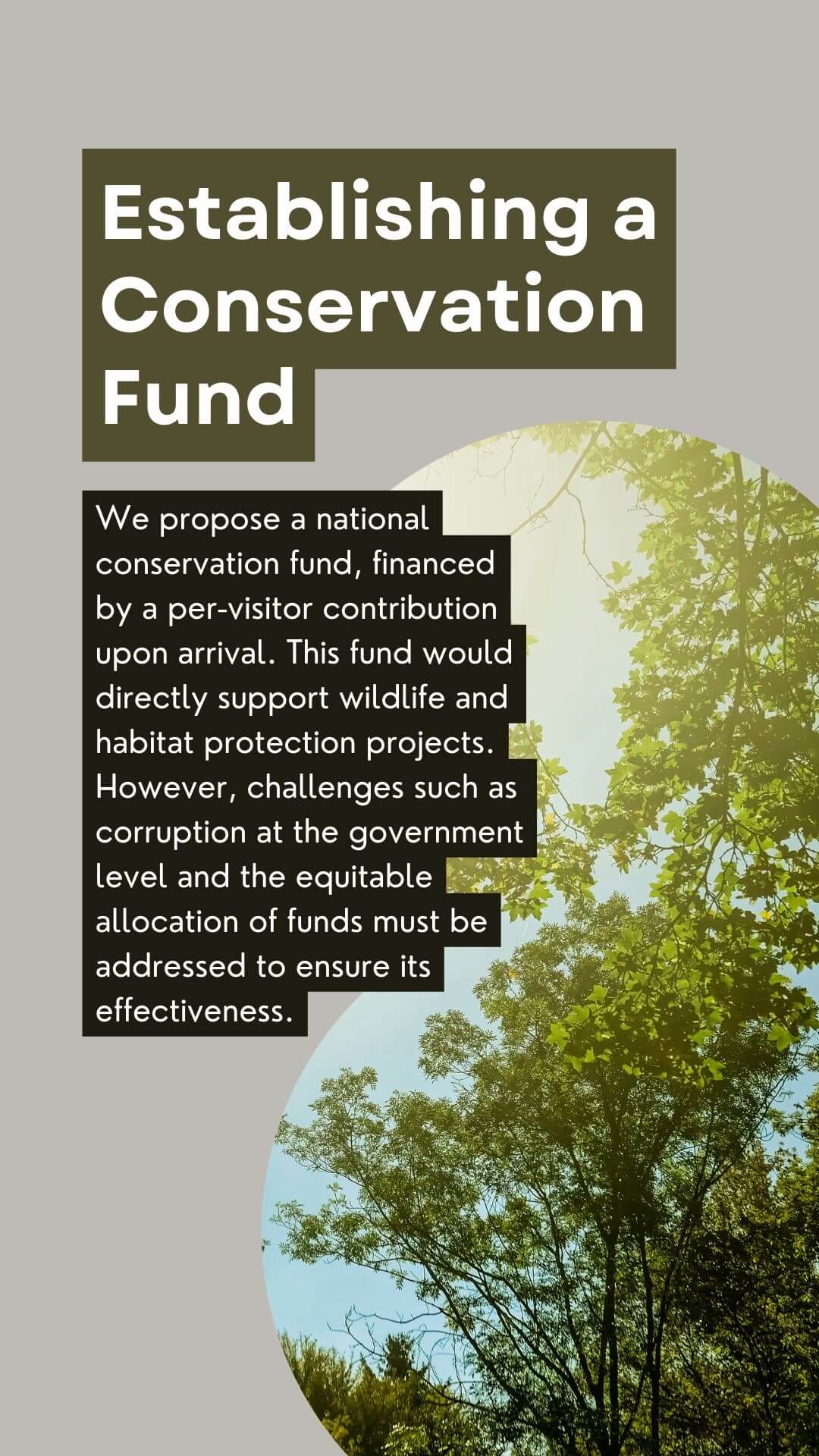
It’s also why we created a Tourism Manifesto—a simple framework we hope will be embraced by other tour companies across Mongolia. We don’t yet know how to make that happen, but it feels like an important first step toward collective responsibility and a more sustainable tourism future.
B Corp certification is valuable for larger companies navigating complex supply chains and global impact tracking. But at Eternal Landscapes, our strength lies in purposeful, hands-on change, not point scoring. We simply don’t have the team size—or the time—for the complex certification process. What we do have is our own Impact Report, where we share our progress, challenges, and tangible results in Mongolia.
Mongolia is immense — roughly the size of Western Europe — yet tourism here often follows the same fixed circuit, visiting a handful of highlights that face heavy pressure during peak season. Even in such a vast country, certain areas are beginning to show early signs of overtourism.
We cap our annual guests at just 200 people, travel mainly in the shoulder seasons, and limit our group sizes to a maximum of six. These small decisions make a big difference.
Our goal is for Mongolia’s landscapes and traditions to remain intact—not worn out. We know that travel has the power to disrupt as much as it can enrich, especially in communities already under pressure from urbanisation, technology, and resource exploitation. That’s why we never stage or request spectacles that our hosts wouldn’t customarily organise themselves.
Vehicles are an inevitable part of travel in Mongolia. We’d love to use electric cars, but outside Ulaanbaatar there’s still no charging infrastructure—and they remain far beyond the reach of most Mongolian drivers.
For city transfers, we use hybrid vehicles. For rural expeditions, we rely on robust vehicles built to withstand Mongolia’s demanding terrain.
We recognise that vehicles carry an environmental cost, which is why we focus on efficient loading, shared travel, and realistic routing to keep per-person emissions as low as possible. While our overall footprint is relatively small compared to many forms of tourism—cruise ships, for example, generate around 451 kg of CO₂ per cabin per day—we see that not as an excuse, but as motivation to keep improving.
These efforts form part of our wider Climate Action Plan which outlines the practical steps we’re taking to measure, reduce, and eventually balance the emissions linked to our operations in Mongolia.
We try our hardest. We don’t buy pallets of single-use bottles. Instead, we travel with refillable 20L water tanks and UV filters, and we offer discounts on Water-to-Go bottles, whose proceeds support carbon-reducing projects in Mongolia.
We invite guests to take part in our Mini Plastic-Free Challenge, avoiding common single-use plastics. And each year, we extend this commitment to our National Park Community Clean-Up, where our team and partners come together to help protect Mongolia’s wilderness areas.
At EL, every itinerary channels income directly into local communities including projects. We work closely with our team, host families, and community partners to ensure they genuinely benefit from our guests’ visits.
We’re careful not to intrude on daily life, and we keep our group sizes small to avoid over-exerting local hosts or placing unsustainable demand on their time and resources. Beyond income, we prioritise long-term relationships, training, and shared opportunities that strengthen local livelihoods.
You can see how this approach translates into measurable outcomes in our Impact Report, where we share the real ways our journeys contribute to Mongolia’s people and places.