Expeditions In Mongolia
Mongolia has long drawn explorers, from historic trailblazers to modern adventurers crossing its vast steppe, deserts, and frozen lakes. This post highlights both contemporary expeditions we’ve supported and the legendary journeys that shaped global understanding of Mongolia. Together, they reveal a landscape that continues to inspire curiosity and why Mongolia remains one of the world’s most compelling destinations for explorers.
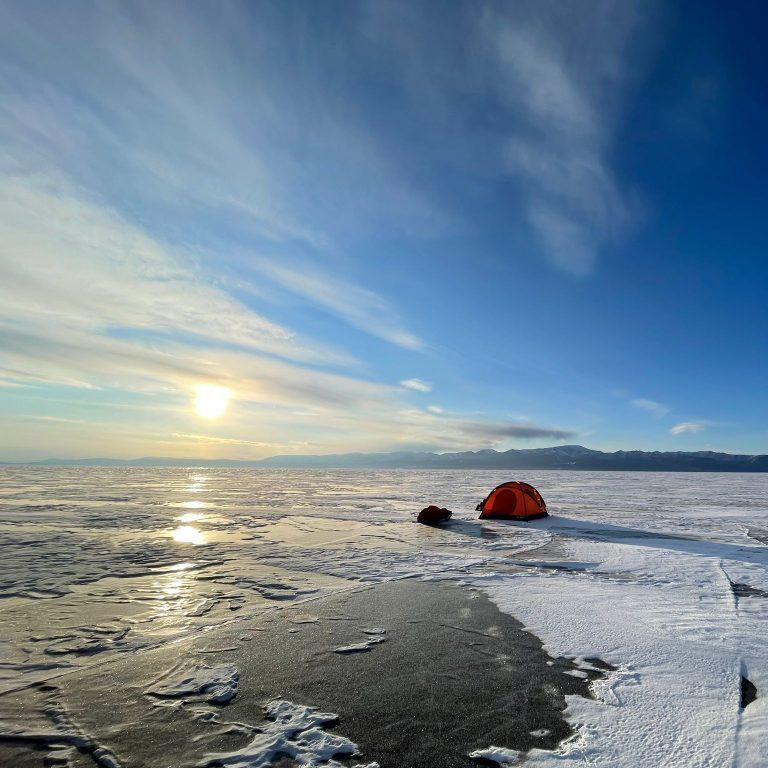
Table of Contents
Modern Expeditions In Mongolia
Mongolia has captured the imagination of explorers and adventurers for centuries. From historical trailblazers who shaped our understanding of Central Asia to contemporary explorers pushing the limits of endurance and curiosity, Mongolia continues to call to those with a passion for discovery. We feel privileged to have supported several remarkable modern expeditions, including that of Jack Toulson, who crossed Mongolia on horseback—an endeavour that earned him membership in the Long Rider’s Guild.
Jack Toulson: Crossing Mongolia on Horseback
Jack expressed his motivation with characteristic candour:
“With the world in a seemingly endless rush to get its hands on a Black Friday Asda telly, what better time to embark on a nostalgic adventure harking back to the good old days of equine exploration. Forget doing it fast or furthest. Just enjoy doing it… Ride across Mongolia and visit one of the last nomadic horse cultures left. Really visit. Learn what it means to live or die by your horsemanship.”
— Jack Toulson
As with many expeditions in Mongolia, the success of Jack’s journey depended on the generosity and knowledge of nomadic herding families. They offered guidance on water sources and grazing for his horses, provided shelter during severe weather, and shared insights that only those deeply connected to the land can offer.
Jack also used his expedition to fundraise for CAMDA (Cambridge Mongolia Development Appeal), a now-closed charity that supported Mongolia’s herders through practical interventions—restoring freshwater wells, repairing machinery, and improving crop-harvesting capacity during the short growing season. Our involvement in supporting CAMDA reflects our longstanding commitment to helping strengthen the resilience of Mongolia’s rural communities.
As Jack later wrote:
“The money raised continued to do good work long after I returned, and perhaps will go some way to repaying the kindness of people that have very little to give, but give it freely and without expectation. People who live in a harmonious battle with nature.”
For those inspired to undertake their own journey, we encourage responsible visits with Mongolia’s herding families. Our guide offers advice on ensuring interactions are respectful, sustainable, and genuinely beneficial:
https://eternal-landscapes.co.uk/how-to-visit-a-mongolian-nomadic-family-respectfully/
On Va Marcher Sur Le Lac: Crossing Khövsgöl Nuur in Winter
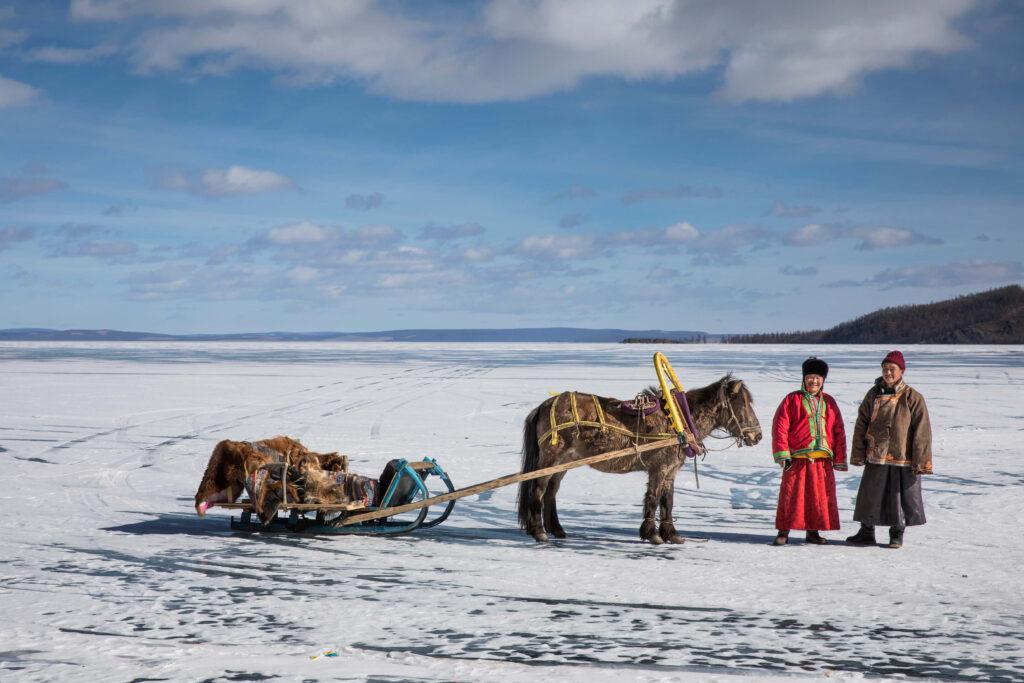
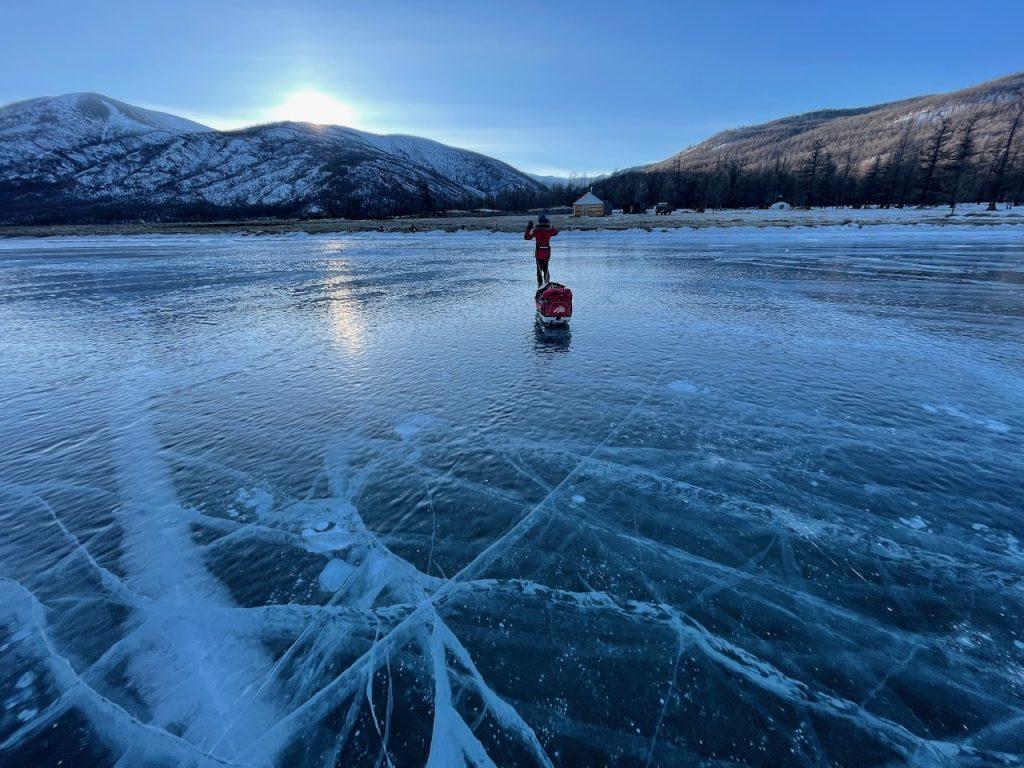
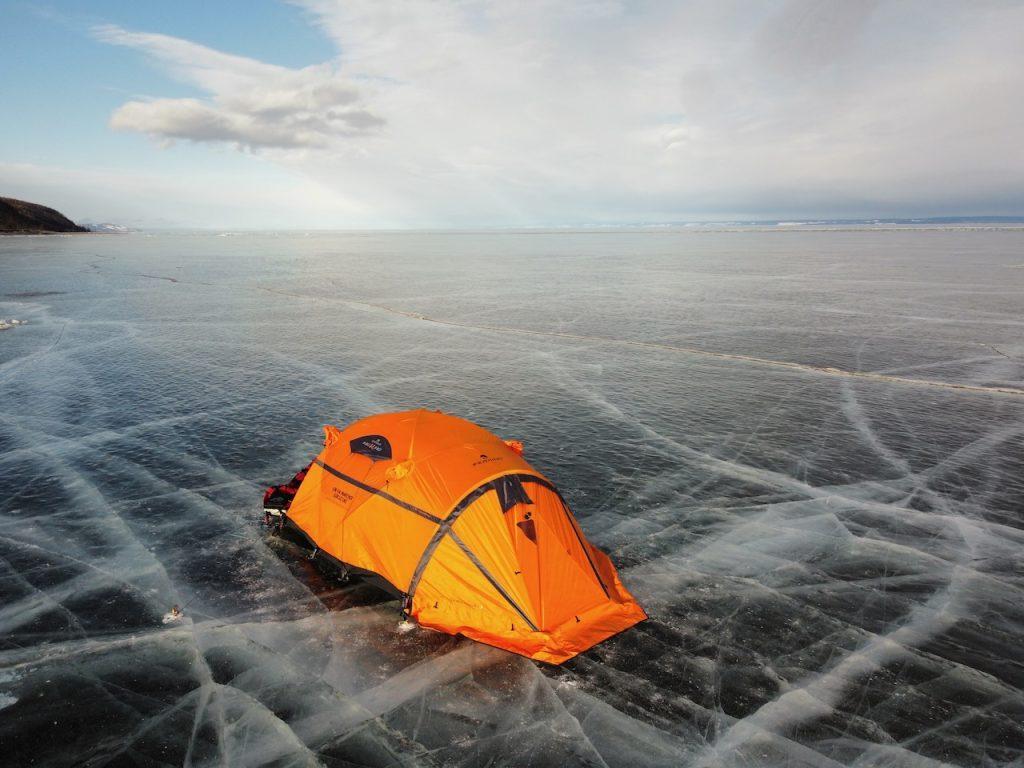
We were also honoured to assist with On Va Marcher Sur Le Lac—Renaud Fulconis and Aliénor Scrizzi’s daring winter expedition across the frozen expanse of Khövsgöl Nuur, travelling from south to north and back again. Their poetic reflection captures the enduring appeal of Mongolia’s landscapes:
“Khövsgöl, a name that already rings in our ears like an invitation to travel. That of an immense expanse of water taken in winter by the ice, in an equally mythical region of the world, Mongolia.”
These modern expeditions remind us that the spirit of exploration continues to thrive. They also connect us to the legacy of those who travelled Mongolia long before roads, maps, or modern infrastructure made journeys easier.
Iconic Expeditions Through Mongolia

Roy Chapman Andrews – Central Asiatic Expeditions
While many of you may be familiar with the iconic adventurer Indiana Jones, did you know that Steven Spielberg purportedly (!) based his character on the 20th-century explorer-scientist Roy Chapman Andrews? Andrews led the groundbreaking Central Asiatic Expeditions to Mongolia’s Gobi Desert in the 1920s. As an American explorer, adventurer, and naturalist, he made significant contributions to science and exploration. Notably, Andrews served as the director of the American Museum of Natural History.
During the Central Asiatic Expeditions, Andrews and his team made groundbreaking discoveries, including the first-known fossil dinosaur eggs. Their remarkable achievements not only expanded our understanding of prehistoric life but also inspired generations of explorers and adventurers to follow in their footsteps.
“Famous explorer, dinosaur hunter… the man who created the metaphor of ‘Outer Mongolia’ as denoting any exceedingly remote place.”
Reading:
– Across Mongolian Plains
– The New Conquest of Central Asia (1921–1930 expedition narratives)
Mildred Cable & Francesca French – The Gobi Desert Travellers
Mildred Cable, a dedicated missionary, embarked on extensive travels throughout western and northwestern China during the 1920s. Her prolific writings, often co-authored with her colleague Fransesca French, offer vivid accounts not only of their missionary work but also of the diverse cultures and landscapes they encountered. Regarded as ‘classics’, these books provide invaluable insights into life in western and northwestern China during the first half of the twentieth century, making them essential reading for anyone interested in the region’s history and culture.
“With the rising of the moon the desert takes on its most captivating appearance, and though the long hours while she travels from one side of the horizon to the other she has her own way with human imagination, softening the austere outlines and investing the barest formations with subtle charm. She is mistress of magic and with one touch can turn the wilderness into a dream world.” Mildred Cable and Francesca French, The Gobi Desert
Reading
Henning Haslund: A Life of Exploration
Born in Denmark, Henning Haslund embarked on a journey to Mongolia in 1923, initially to assist with an experimental agricultural project. Despite the project’s eventual failure, Henning’s thirst for adventure and exploration grew stronger and he embarked on expeditions that spanned several years. Together with Sven Hedin, whose path he crossed, their expeditions through the Gobi Desert laid the groundwork for groundbreaking scientific research.
Henning’s experiences alongside Sven Hedin not only shaped his understanding of the Gobi Desert but also enriched his knowledge of scientific exploration. Their collaboration contributed to the legacy of exploration in Central Asia, leaving an indelible mark on the history of Mongolian exploration.
‘We rolled ourselves in our blankets and slept for the first time on Asiatic ground and under the clear sky of Asia…We stood on the threshold of the wide plateau at the entrance of the land of the nomads. We could not have dreamed of a more captivating entrance to a new country, and when the sun sank upon that day, we felt as though born into a new life – a life which had the strength of the hills, the depth of the heavens and the beauty of the sunrise.’ Henning Haslund-Christensen
William Of Rubrick: A Medieval Account of the Mongol Empire
William of Rubrick was a Flemish Franciscan monk, (1210-ca. – 1270) who wrote the most detailed and valuable of the early Western accounts of the Mongols. In 1253 he set out through the lands of the western part of their empire (what we know as the Golden Horde) – his roundtrip journey lasted the better part of three years. He was the first European to visit the Mongol capital of Karakorum (now Kharkhorin) and return to write about it.
Reading
James Gilmour: Missionary Travels Across the Steppe
James Gilmour (1843-1891) was a Scottish Protestant Christian missionary in China and Mongolia. He served with the London Missionary Society and was ordained as a missionary to Mongolia in 1871. He spent his summers with nomadic Mongols on the plains of Mongolia and winters with Mongols in Peking (Beijing).
Reading
Beatrix Bulstrode: A British Woman’s Journey Through Mongolia
An intrepid British woman, Beatrix Bulstrode, embarked on two remarkable journeys through Mongolia in 1911 and again in 1912. The culmination of her adventures is immortalised in ‘A Tour in Mongolia’, offering readers a glimpse into Mongolia at the turn of the 20th century.
Reading

Baigalmaa Norjmaa: A Mongolian Woman’s Extraordinary Trek
Baigalmaa Norjmaa was Mongolia’s own inspiring female adventurer who was undertaking a 12,000km trek with Bactrian camels from Mongolia’s capital city – Ulaanbaatar – through to London. The idea that drove her Steppes to the West expedition was to promote Mongolian culture worldwide, share knowledge with people whom Baigalmaa met along her route, and also to empower women – especially those in rural areas to embark on their own future projects. It is with great sadness to everyone involved in her expedition that her death (due to a ger fire) was announced in early 2021.
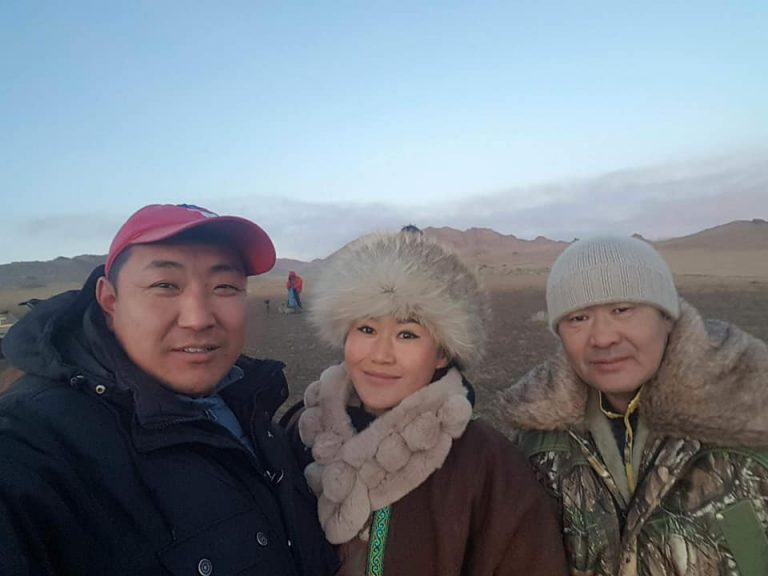
Turuu and Nyamka were privileged to meet her when she was on the first part of her expedition. We’ll finish this blog post with this photo of them – perfectly capturing her sense of adventure and spirit.
The Enduring Call of Adventure
As I reflect on these remarkable journeys and the adventurers who have explored Mongolia’s vast and rugged landscapes, I’ll conclude with a quote by Sir Francis Richard Burton, as shared by Jack Toulson on his expedition website:
’Of the gladdest moments in human life, methinks is the departure upon a distant journey to unknown lands. Shaking off with one mighty effort the fetters of habit, the leaden weight of Routine, the cloak of many Cares and the Slavery of Home, man feels once more happy. The blood flows with the fast circulation of childhood….afresh dawns the morn of life…’
These words encapsulate the essence of adventure and the exhilarating thrill of embarking on a journey into the unknown. May they inspire you to embrace the spirit of exploration and embark on your own odyssey of discovery!
Jess @ Eternal Landscapes